Why We Still Need to Show Up in Person
Reflections from the BTN Government Travel Summit and an HRS Americas offsite highlight how AI, compliance realities, and face-to-face collaboration are shaping the future of government and corporate travel programs.

Key Takeaways
- Public sector travel demands practicality and compliance-first thinking
- AI must prove real-world implementation, not just innovation
- In-person collaboration builds trust and stronger program outcomes
- Business travel should be treated as a strategic investment, not a cost line
Introduction
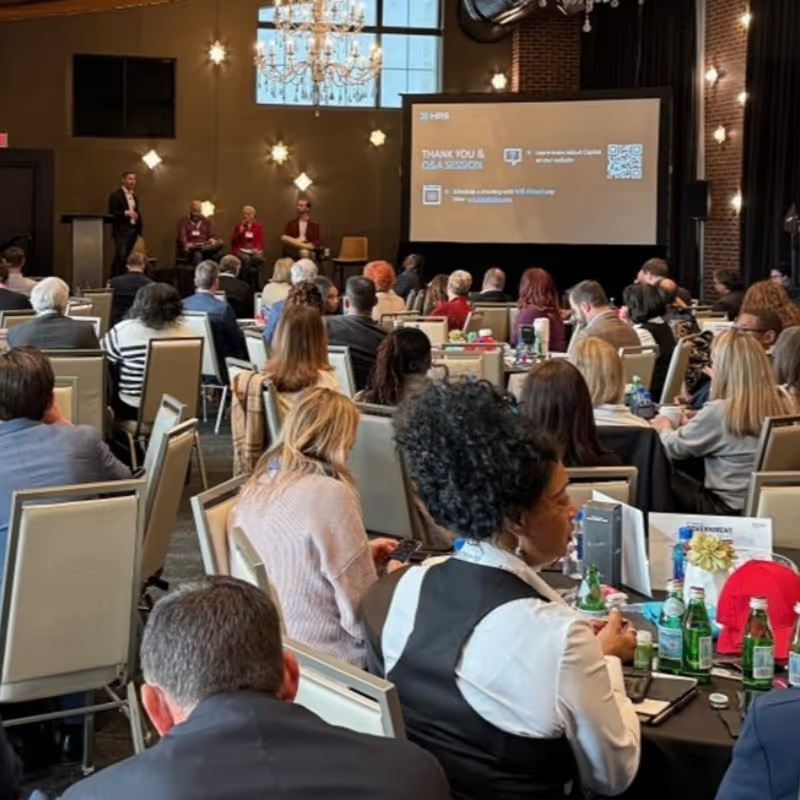
This past week I flew to four cities and attended the BTN Group Government Travel Summit in Washington, DC. This was my first Government Summit, which BTN positions as a forum for travel buyers supporting government agencies, government contractors, and nonprofits to compare approaches to policy, compliance, procurement requirements, duty of care, and program operations. Thanks to Louis Magliaro for the invitation. The conversations were grounded in the reality of a wildly changing US political climate, with a focus on what actually works inside complex programs where accountability is high and flexibility is limited.
More than anything, the summit reinforced a point I have seen play out repeatedly in corporate travel. Collaboration and understanding simply work better when people are in the same room. It’s the reason that business travel returned post-COVID faster than anyone anticipated. Conversations happen differently when you are sitting across the table from someone.
According to a recent Fast Company article I read:
"PwC reported that 90% of executives think customers highly trust their companies, while only 30% of consumers say they do."
That gap is why showing up, being transparent with publications like Corporate Insights, and answering questions live can matter so much for credibility. In a world where every company is making the same promises, who can you trust?
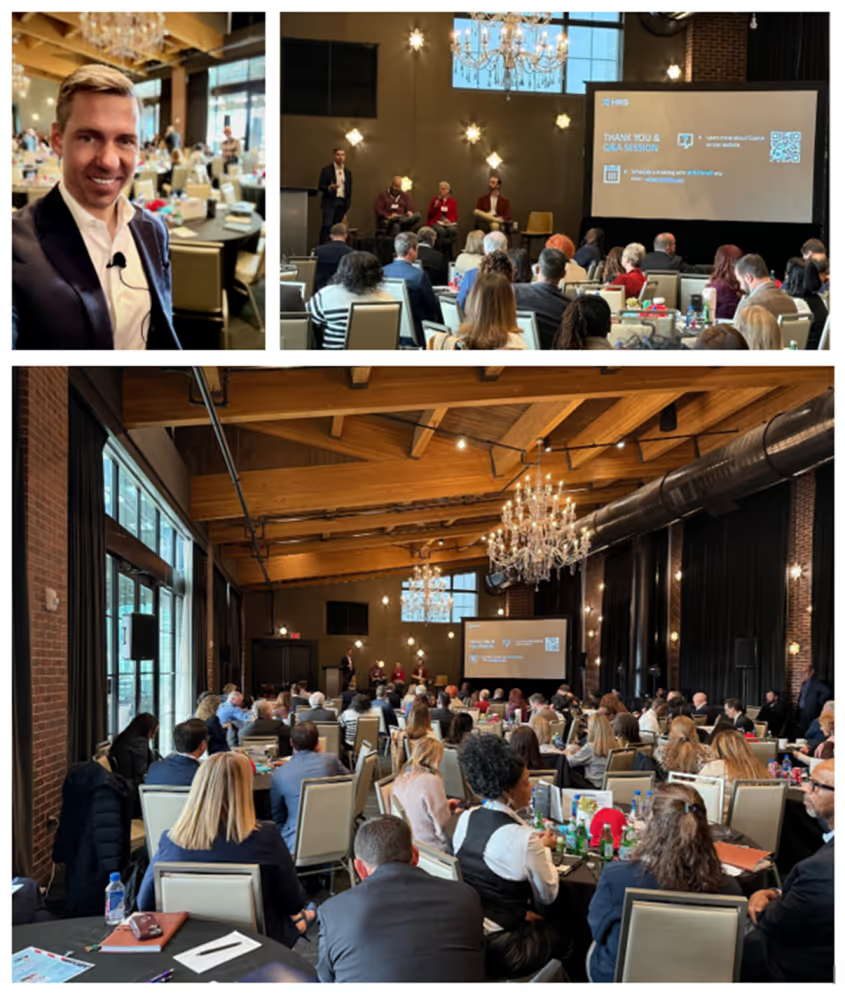
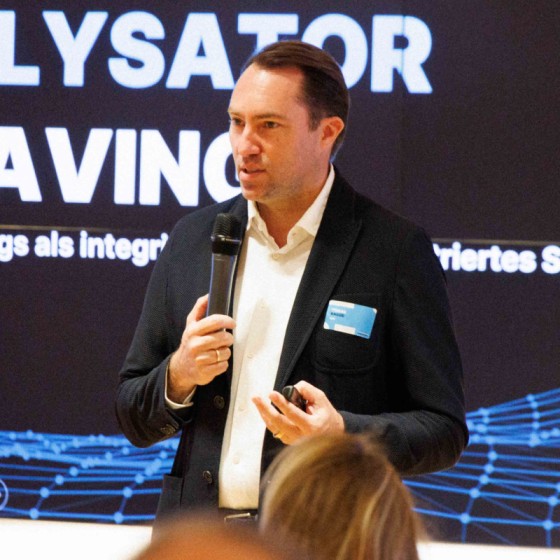
I had the opportunity to speak in front of and meet leaders from some of our nation’s largest nonprofits and government agencies, including the U.S. Department of State, U.S. Department of Justice and the FDA. The format was tight and direct: seven minutes to demonstrate HRS Stay, Work & Pay's Copilot, followed by four minutes of questions from judges and the same from the audience.
Our newest technology showed very well.
When you show technology in person, people can see the workflow, ask the uncomfortable questions immediately, and judge whether it is practical for their environment. In travel and procurement, practicality wins. And while our technology isn’t yet a fit for the complexities the US government, it provided the attendees an opportunity to see one of the best tools available today in the private sector.
As I’ve shared before, HRS Copilot is positioned as an AI assistant for lodging and meetings that provides real time insight and recommendations across outcomes travel leaders care about (including spend, program adoption, compliance, and sustainability). BTN publications have covered Copilot in the past as an “AI tool designed to guide hotel program strategy and decisions, which aligns well with the kinds of conversations taking place at a public sector focused event.”
I was on stage with an experienced group of industry leaders:
- Greg Wilczek, CEO, and Vishal Chouhan, CPO, from emPath Travel & Expense
- Mat Orrego , CEO and Founder of Cornerstone Information Systems
- Simon Woods, SVP Global Sales at PredictX .
The judging panel brought a useful mix of perspectives across consulting, managed travel, and the supplier community including:
- Steve Clagg, Independent Travel Consultant
- Hunter McGuire, Lead Account Manager - Military and Federal Government at Southwest Airlines
- Julie Simpson, Senior Consultant at GoldSpring Consulting
The net result was a discussion that went beyond product features and into implementation realities, which is where adoption is won or lost.

The benefit of in person meetings is that you can read the room. You can see what lands and where people zone in or zone out. You can tell when someone is interested but skeptical, and you can address it in the moment.
After Washington, I flew to New York and then made the late night move from LaGuardia to JFK to catch an early flight the next morning to our Americas team meeting. If you have never done the LaGuardia to JFK shuffle late at night, just know it builds character. We flew to the Dominican Republic and it was a sharp contrast to both New York and DC in every way, including the weather. New York was about 10 degrees with snow...the Dominican Republic was 75 degrees and sunny.
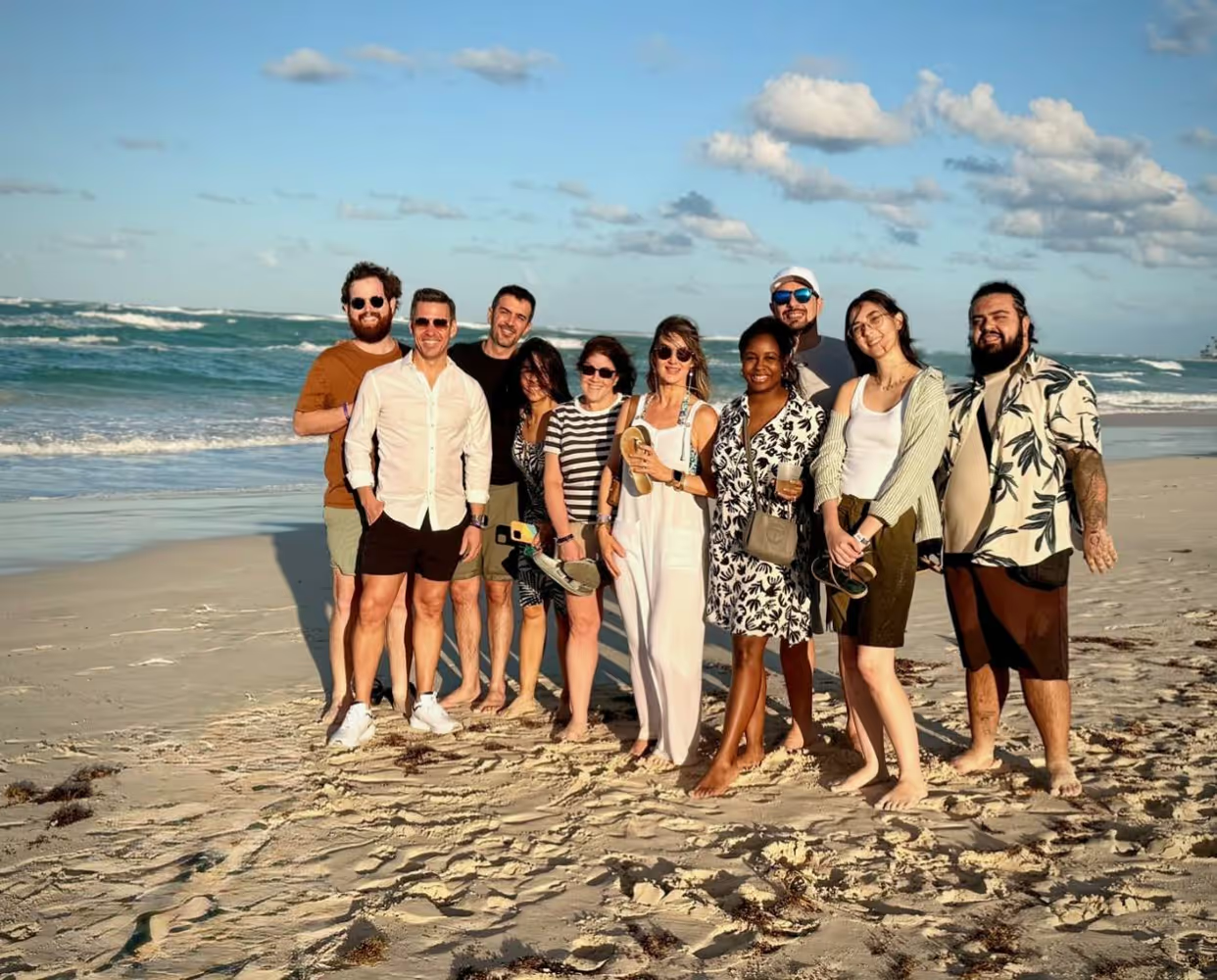
We chose the Dominican Republic intentionally. Our Americas team is distributed across the United States and Latin America, with roughly half of the team located in Brazil. A central location made sense, and with a remote team working on travel technology, travel is inevitable. I’m thankful for Tobias Ragge, our CEO and Alexandra Barth, our CPO, who both support creating a culture where in-person meetings are encouraged and expected to drive collaboration, teamwork and excellence. I’m also thankful to Kari Wendel, one of the leading meetings management practitioners in the US and my colleague and leader who pushed to make this happen. Rather than treating travel as scattered, reactive trips, HRS views these trips as planned investments with an expected measurable return.
Because I travel often, I think about the impact of these business trips and how we measure our performance when traveling for business. There is plenty of research behind why the total trip cost matters. Studies comparing face to face sessions with video tools like Zoom have found face to face collaboration can be more effective for project-oriented work. Research continues to show meaningful differences between in person and virtual collaboration, especially for creative work and alignment. Need justifications for more in-person meetings? Check out these resources:
- Stanford has reported findings that in person teams generate 20% more ideas than teams working virtually.
- A peer reviewed paper in Nature similarly found that virtual communication can reduce creative idea generation compared with in person collaboration.
- Another National Library of Medicine study compared face to face sessions with digital tools in project oriented tasks and found face to face meetings were far more effective.Meeting and discussing our G2M approach in Punta Cana
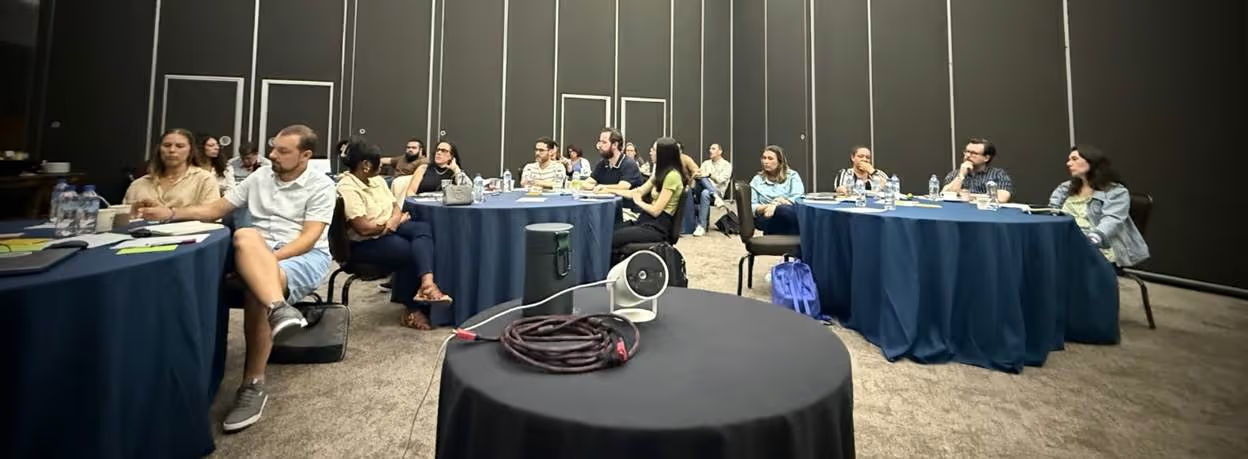
Our offsite wasn’t just about the location, though that was nice, but about building a stronger regional culture, aligning on how we serve customers, and creating clarity and momentum. That teamwork can be difficult to replicate through video calls. I have written before that the best conversations often happen when people feel safe to speak plainly, and that is hard to replicate when everyone is muted and often multitasking.
Because we increasingly support customers through best practices and best in class procurement technology, we are holding ourselves to the same standard internally: spend smarter, not just spend less.

I wrapped the week flying back through Dallas on Thursday night, glad to be home, and to watch my daughter dance in a competition. It was a reminder that travel can be demanding, but when it is purposeful, it creates outcomes that justify the effort. These trips also make what’s waiting for you back home, feel that much more important!
If you’d like to learn more about HRS Copilot, reach out and I’d be happy to provide you a personal demonstration of our technology.
.jpg)
.avif)