Will AI Replace Travel Managers: Live from Salt Lake City
This article reflects on a GBTA Utah luncheon discussion about AI’s growing impact on corporate travel, highlighting how automation is shifting travel managers toward more strategic, consultative roles rather than replacing them.

.avif)
Key Takeaways
- AI is already operational, not experimental
- Travel managers are shifting from execution to strategy
- Payments and reconciliation are prime areas for AI impact
- Reskilling and governance matter more than job replacement
Introduction
Yesterday I had the privilege of traveling to Salt Lake City and speaking at the GBTA | UTAH Business Travel Association (UBTA) luncheon. The room was filled with travel managers, TMC leaders, and suppliers who are all staring at the same reality. Artificial intelligence is not coming someday. It is already here, already influencing the way programs operate, and already shaping the expectations of travelers and executives.

My session, repeated from the panel I hosted earlier this year at GBTA | Global Business Travel Association Annual Convention in Denver, asked a question that gets louder every month. Will AI replace the travel manager? It is a question with a very human edge, and it opens the door to a deeper conversation about the value travel managers create and the transformation that is now underway across our industry.
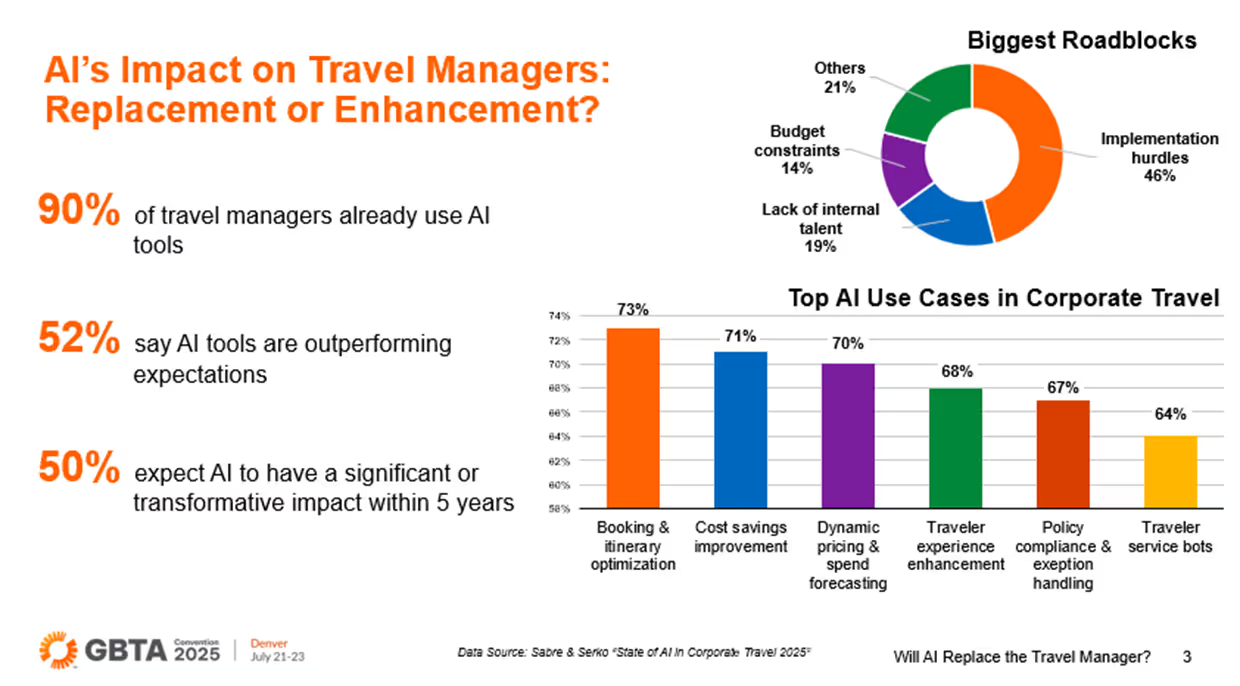
I began with a simple observation: the core responsibilities of program leaders have always shifted with the arrival of new tools...what changed this past year is the speed of that change!
Earlier this year I wrote that AI would move from experiments to operations far faster than we expected. I underestimated the pace. We are seeing dozens of tasks that once required manual review now moving into automated or assisted workflows. What we once described as future state is now being implemented inside live travel programs.
The discussion at UBTA reflected this momentum. Travel managers do not fear automation as they've integrated and embraced that for decades. Instead, they fear being asked to deliver more with fewer resources while technology outpaces education and governance.
The real question is not whether AI takes work away. The real question is whether the industry can reskill, restructure, and redesign travel programs quickly enough to take advantage of the gains AI provides.
I shared scenarios where AI is already reshaping the workload. Policy review, exception routing, supplier data comparisons, rate verification, and itinerary issue detection are now handled at scale with machine assistance. Contract analytics are shifting from static spreadsheets to systems that can evaluate clauses, detect risk, and highlight negotiation opportunities. Even traveler communications are improving as AI assists with classification, routing, and knowledge retrieval. See below:
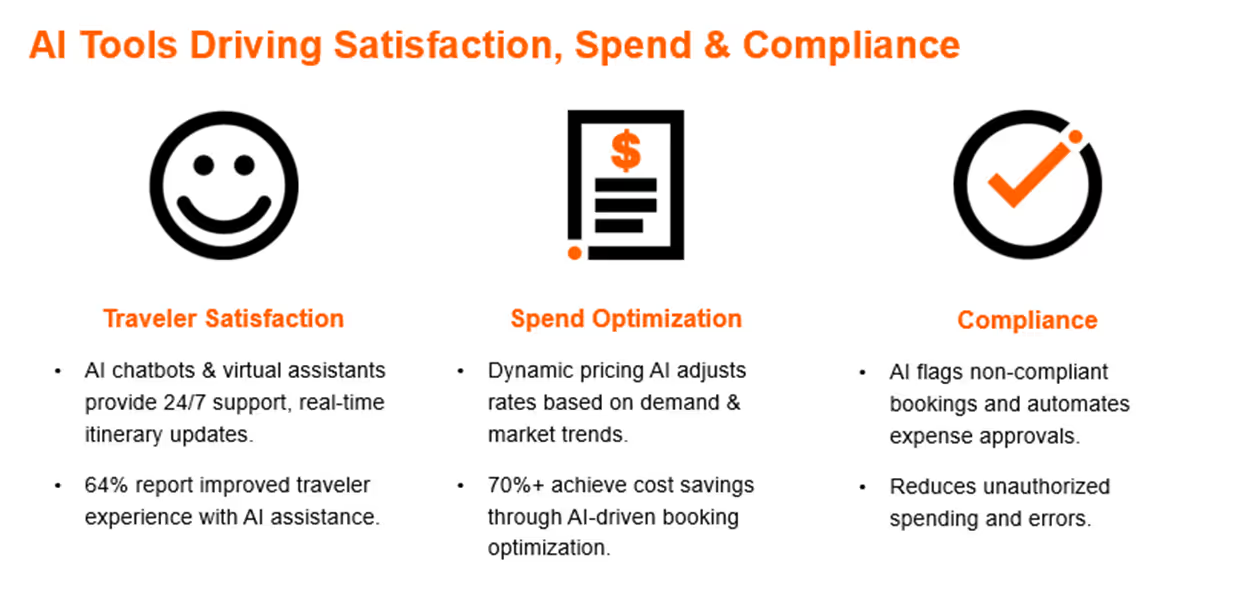
Interestingly enough, The Company Dime published a timely story yesterday that underscores this shift. The article, written by Jay Campbell and titled “TMC Metrics To Watch For Years To Come”, makes the case that agencies will become significantly more efficient as they implement AI across their operating models. It offers a striking data point from Flight Centre Travel Group. They reported that AI email routing has already saved sixty four thousand hours of full time equivalent labor by triaging six and a half million requests. Only a few months earlier that same metric stood at fifty thousand hours across five million messages. This is the shape of the new baseline, more precise and scalable than traditional support structures.
Likewise, HRS Group is seeing massive gains in productivity from AI, many I shared at the Americas Business Travel Show last month in New York where I described new capabilities of Copilot, the AI Assistant that optimizes lodging and meeting programs.
At UBTA, I discussed what this AI shift means for the travel manager. Their role won’t be eliminated, but rather their work will be more strategic, more consultative, and more aligned to the expectations of the C suite. Program design, experience management, commercial strategy, supplier influence, sustainability planning, traveler well being, and payment optimization all grow in importance as operational workload moves into automated channels.
None of this removes the need for expertise. In fact, it raises the bar. The travel managers who thrive in the next era will be the ones who lean into AI rather than resist it. They will understand the tools, question the assumptions, challenge the models, and partner with suppliers to design better workflows. They will also protect the parts of travel management that should not be automated, especially those involving safety, traveler care, and executive engagement.
Poll Results from the day included: 78% of buyers are not using AI at all to drive better traveler results. Nearly 40% see AI having the biggest impact on payment, invoicing, reconciliation and reimbursement. See below for more:
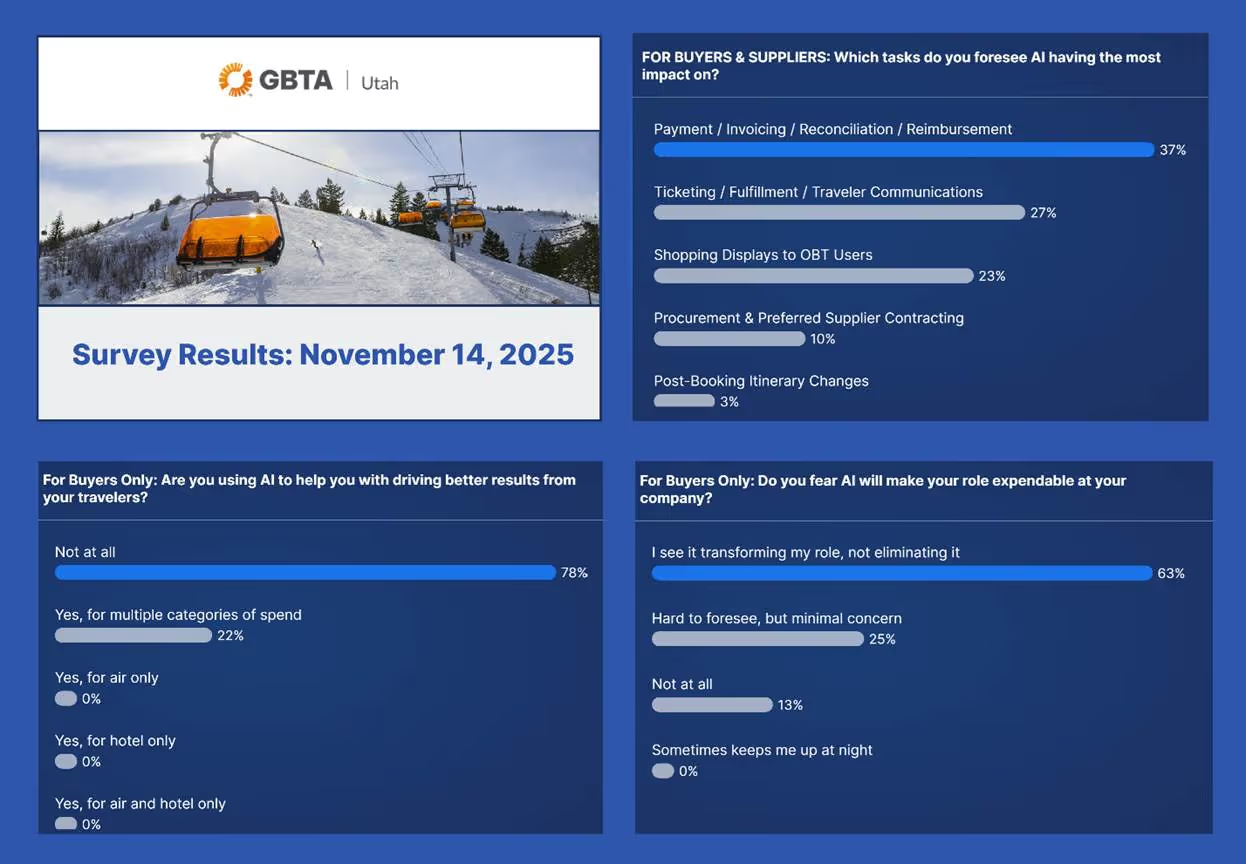
It's great to know that HRS Stay, Work & Pay is investing in the areas that buyers and suppliers believe have the biggest opportunity with payment, invoicing, reconciliation and reimbursement.
As always, these conversations remind me that the travel industry is not defined by technology, but by those who understand how to use it to create value. AI will change our work for sure...but the future belongs to those who combine experience with a willingness to embrace new tools and tech. Thanks to Melissa Johnson, president of the chapter for the the invitation!
.jpg)
.avif)