Why corporate travel programs still operate in the dark, and how AI is changing that
Despite the rise of real-time analytics, many corporate travel programs still lack visibility over nearly 40% of their lodging spend. This article explores why fragmented systems keep travel leaders “in the dark” — and how AI-driven orchestration, like HRS Copilot, is redefining control, compliance, and strategic impact across global travel programs.

.avif)
Key Takeaways
Key Takeaway
- On average, around 40% of transient hotel spend sits outside the scope of managed programs.
- This visibility gap impacts traveller safety, ESG tracking, policy compliance and duty of care.
- The problem is a fragmented ecosystem: booking tools, expense platforms, card data feeds and supplier contracts don’t integrate.
- Suppliers are also failing to adhere to agreements, weakening corporate lodging program leverage.
- The solution isn't marginal process tweaks but orchestration — increasingly powered by AI.
- The AI-driven platform “Copilot” from HRS enables real-time insight and action, not just static analytics.
- Travel programmes must evolve structurally — not just adopt new tech — for full transformation.
In an age of real-time dashboards, predictive analytics, and hyper-personalized digital services, it’s easy to assume corporate travel has kept pace. But beneath the surface of many global programs lies a persistent blind spot – one that continues to undermine control, compliance, and cost-efficiency. The issue isn’t new, but it becomes more visible.
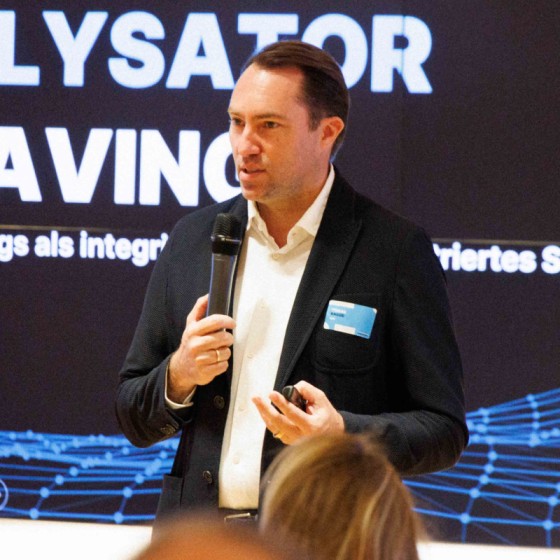
HRS hosted a webinar session that put this challenge under the spotlight. Led by industry veterans Will Pinnell (SVP Americas, HRS) and Greeley Koch (Managing Director, 490 Consulting), the discussion centered on the enduring opacity of lodging spend, and why artificial intelligence may finally offer a meaningful way forward.
The comparison made early in the session was striking. Referencing the Apollo 8 mission and its 47 minutes of radio silence while orbiting the far side of the moon, Pinnell drew a sharp parallel to how travel leaders experience large segments of their hotel spend: invisible, unauditable, and unactionable. On average, 40% of transient hotel spend sits outside the scope of managed programs. That figure climbs significantly when long-stay accommodations, simple meetings, and card-reimbursed hotel nights are included. These are not isolated transactions. They are systemic gaps in the program architecture, and they compromise far more than financial oversight.
The consequences extend well beyond financial oversight. Lack of visibility impacts traveler safety, ESG tracking, policy compliance, and duty of care. It exposes companies to financial leakage and reputational risk. Particularly as finance and procurement leaders face increasing scrutiny over indirect spend and cross-border compliance.
Yet perhaps the most critical implication is the strategic one. When travel managers are forced to spend their time resolving fragmented rate issues or reconciling data sources, they’re no longer operating as strategic contributors. As Koch noted, the expectations for travel leaders have shifted dramatically, but the tools supporting them have not.
“They [travel managers] are being asked to be more strategically focused… really with what the purpose of the travel program is. But then they get bogged down into the process, into the weeds. And I really think this is, you know, a good use case if you will, for AI.”
GREELEY KOCH
Much of the problem stems from the ecosystem itself. Corporate travel programs rely on interconnected but often poorly integrated systems: booking tools, expense platforms, card data feeds, and supplier contracts. These systems rarely speak the same language, and the consequence is a patchwork of partial truths. For many companies, even the definition of “hotel spend” varies depending on the data source being referenced.
What makes this more than an operational issue – what elevates it to the level of strategic urgency – is the data emerging from the supply side. Recent data from NYU’s School of Hospitality, co-led by Koch, further highlights the issue from the supply side.
“66% of large hotel chains said that they lacked the resources or expertise in loading and auditing of corporate travel negotiated rates into the GDS and other channels. And then you look at midsize hotels [58%] and independent hotels [62%]. When I saw this I was surprised because I thought, after all these years we had this process down, but clearly we don’t, and we clearly see frustration with the travelers when they’re not able to get their negotiated rate. We see the travel departments get frustrated. We see everybody get frustrated, but we’ve always been trying to figure out where in the process the breakdown lies.”
GREELEY KOCH
In other words, the disconnect isn’t just on the buyer’s side. Suppliers are struggling to maintain compliance with the very agreements that corporate programs rely on for leverage.
Solving this doesn’t require marginal process improvements. It requires orchestration – and increasingly, orchestration powered by AI.
That’s where Copilot, HRS’ AI-driven platform, enters the conversation. Positioned as a true orchestration layer, Copilot is designed to surface insight and enable immediate action. Built on deep data integration and intelligent automation, the platform allows travel leaders to move from static analytics to real-time decision-making.
“For the first time, really, you’re able to get access to information in a way that for years has just taken someone crunching spreadsheet data. And now you can pull this together in a holistic strategic way… One of the things this product does differently than perhaps a reporting dashboard or other tools you’ve received in the past is that you can speak to it. You can ask it questions, and not only will it return results in real time, but then you can action those results in real time.”
WILL PINNELL
Travel leaders can ask open-ended questions – from “What’s my ADR in New York this quarter?” to “Which properties show persistent rate leakage?” – and receive instant answers. More importantly, they can take immediate action based on the insight, without waiting for a quarterly review or offline follow-up.
One of the Copilot’s values lies in its flexibility. Programs can prioritize by region, policy, or persona – whether that means dialing up savings focus in the US or emphasizing sustainability in Europe. The orchestration logic can adapt to what matters most, where it matters most.
Of course, the technology is only one part of the equation. Real transformation depends not just on openness to innovation, but on a willingness to reimagine how travel programs are structured and measured. For companies still exploring the business case, Pinnell offered a clear next step:
“Our technology will save you money in your hotel spend, full stop. But we don’t want you just to take our word for it. So we actually will take your data for the last year, we’ll enter into a nondisclosure agreement, and we’ll look at it and we’ll make an analysis of it. And then we’ll give you back what we believe your savings could have been, what we believe are missed savings opportunities on average companies that start using HRS. They save 17% on their hotel spend. So depending on the size of your program, it could be a significant cost savings. But, as I mentioned before, it’s not always about savings. Often it’s about driving the satisfaction of the travelers or the sustainability, etc.”
WILL PINNELL
The session was a candid conversation about the need for change, and the tools finally capable of enabling it. As expectations rise and programs grow more complex, orchestration is becoming a core capability.
“The more I talk to folks the more I’m hearing about this whole journey orchestration… it’s not just savings compliance. But it is user experience. It’s the content. It’s all these other things that are available and how we look at that kind of end-to-end journey. And you know how that is being orchestrated and pulled together. And because it’s gotten more complex, you know, this is where again I think these AI tools and different things can be so helpful to the travel leaders and to the suppliers that are out there. So I spent a lot of time talking to companies about this orchestration, this journey orchestration. It’s… we’re going to hear more and more about that, I think.”
GREELEY KOCH
In this context, AI is a real strategic differentiator – the one that corporate travel can no longer afford to ignore. And it may be the only viable path out of the dark.
The takeaway from this discussion is clear: the visibility gap in corporate lodging is holding companies back strategically. AI-powered orchestration is becoming essential to how travel programs are managed, measured, and optimized. For travel leaders who are ready to move beyond patchwork systems and quick fixes, the platforms to drive real, lasting change are finally here.
Watch the full webinar recording where Will Pinnell and Greeley Koch dive deeper into these insights to cut through the complexity and bring clarity.
.jpg)
.avif)