What NYU's Students Taught Me About Meetings, AI, and Common Sense
Guest lecturing at NYU offered a rare lens into how the next generation views meetings, AI, and technology decisions—highlighting a growing gap between industry habits and future expectations around strategy, alignment, and impact.

.avif)
Key Takeaways
- Students choose tech based on alignment, not brand
- AI interest is high, real usage is still low
- Small meetings are becoming strategic assets
- The next generation is challenging industry assumptions
Introduction
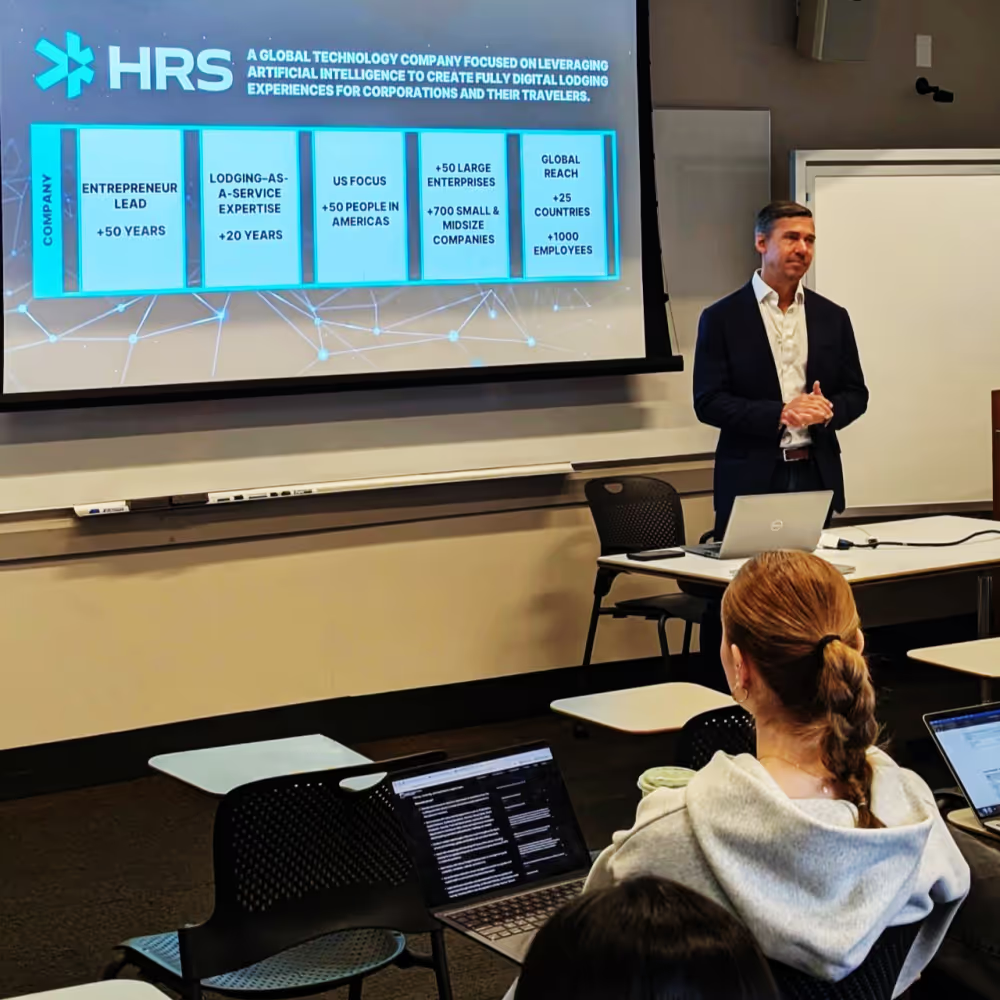
When I first shared my reflections in “Consultants Speak, Part Three,” I had just started guest lecturing at New York University and was amazed at how much I learned while trying to teach. Fast forward a semester, and those fresh eyes I wrote about are now laser-focused. I’ve logged sessions across two undergraduate courses (Corporate Travel Management and Hospitality and Travel Technology & Innovation) and three fall classes, including a graduate-level course, Managing Your Event Business, where I also served as a research judge.
Lecturing in these courses has been eye-opening.
The classroom doesn’t just test your ability to explain things. It tested my ability to adapt. And if you haven’t stood in front of a group of smart, mildly skeptical graduate students and tried to explain the business model of a meetings tech provider, I recommend it. It is the fastest way to realize whether what we are doing in the industry makes any sense.
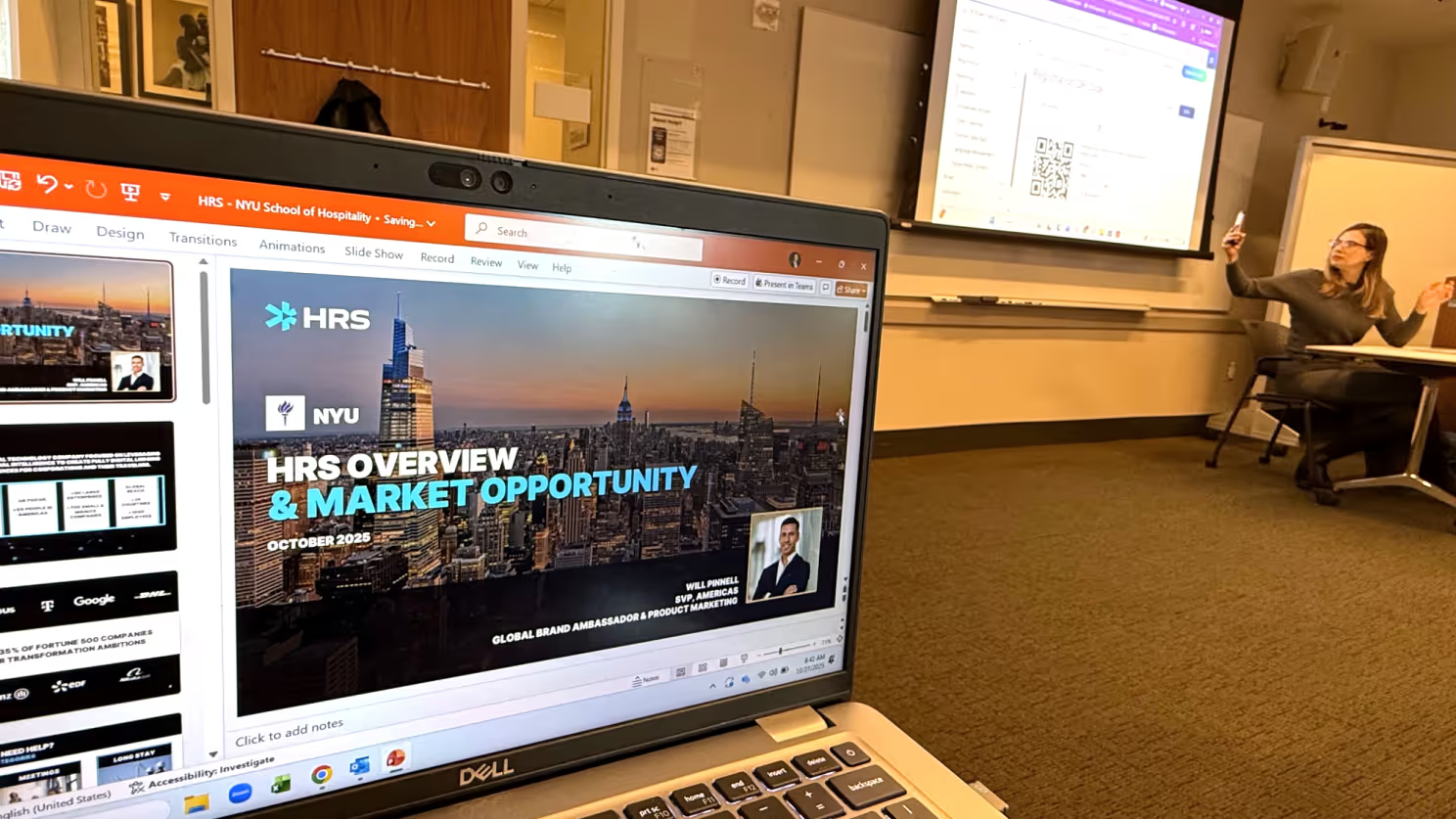
The final project in Peter Rosenberger’s graduate course proved that point. His final project was equal parts consulting pitch and creative storytelling. Students had to build a company from scratch, define the purpose of a meeting they’d host, navigate challenges like budget and tech gaps, and select a vendor to bring it to life. They then broke down that vendor’s value prop, revenue model, target market, and competitive edge. It was a full-blown consulting analysis where no one was allowed to choose HRS Stay, Work & Pay (they already had that case study covered), but instead researched companies like Cvent , BCD Meetings & Events, Bizzabo, and Zoho.
The students knew exactly what they wanted and why.
But here is what really stood out: they did not pick companies based on brand recognition or market share. They picked based on alignment. Some needed simplicity. Others needed scalability. Some needed engagement. Others, integration. That is how real sourcing decisions should work, but because of our biases or lack of research often do not.
As I sat judging and scoring, I realized something: this was more than a classroom exercise. It was a reflection of how fast the meetings space is evolving and how fast we’ll all need to evolve with it.
AI: Hype vs. Habit
The energy around AI in these presentations was high. Several teams pitched concepts using AI for live sentiment tracking, agenda personalization, or venue optimization. They weren’t imagining the future, but describing tools that (in theory) exist right now. But in practice? We’re still early.
Case in point: a recent BCD Travel survey found that while 61% of travel buyers say AI and automation will shape the future of sourcing, only 14% are using it at all, and just 1% are using it extensively. Nearly half are still “exploring” it — which is usually corporate speak for “we talked about it on a Teams call once.”
Source: BTN, “BCD Survey: Buyers Considering AI for Sourcing But Few Using”
The students spotted the gap. I challenged them to ask: Is this AI actually intelligent, or just a template? Does the tool make the meeting better, or just more expensive? Do I need this tech, or am I just afraid of being left behind?
They’re asking the same questions our industry should be asking.
Small Meetings, Strategic Impact
If there’s one theme that came up again and again, it’s this: small meetings are not small anymore. The teams in class treated them as strategy platforms. These students treated them like product launches, investor summits, and culture-builders. One team imagined a hybrid design sprint for a new SaaS product. Another built an “immersive leadership offsite” complete with behavioral tracking and adaptive content. These weren’t just check-the-box sessions. They were deeply intentional.
All of this makes the reality in many companies all the more interesting. Despite how strategic these meetings can be, they’re often handled informally, booked outside of managed channels, and tracked only when someone forgets to file an expense. That’s a problem this next generation sees as we talked through savings, sustainability, security and satisfaction of travelers. These students want meetings to drive business outcomes, not just fill calendars.
From Front of the Class to Back of the Boardroom
What’s most humbling about teaching isn’t what you teach, but what you learn. These students are digital natives. They’ve never known a world without mobile apps, on-demand data, or generative AI. That gives them a certain fearlessness, but also a clarity that is refreshing. They don’t care about legacy systems, long-standing vendor relationships, or “the way we’ve always done it.” They care about what works.
In fact, I’ll be carrying these lessons into future episodes of the Corporate Insights Podcast, including a soon to be recorded session with NYU’s own Dr. Vanja Bogicevic. We will dig into what students are seeing, what businesses are missing, and why the future of meetings might be more student-driven than we think. In addition, our CEO Tobias Ragge will be hosting a guest lecture at NYU’s School of Professional Studies in their Incubator next month, speaking with some of these same students about the future of corporate travel and meetings management through the lens of an executive and entrepreneur.
If this semester taught me anything, it’s that the people who are going to shape the future of this industry are already asking the right questions. Those questions don’t always come from the person with the most experience…but sometimes from the person who is not afraid to challenge assumptions.
Want to discuss small meetings? Let’s talk…

.jpg)
.avif)